Vol. I · No. 2
Central Park, New York
Thinking in Central Park
On motion, silence, and the work that happens before a plan has a name.
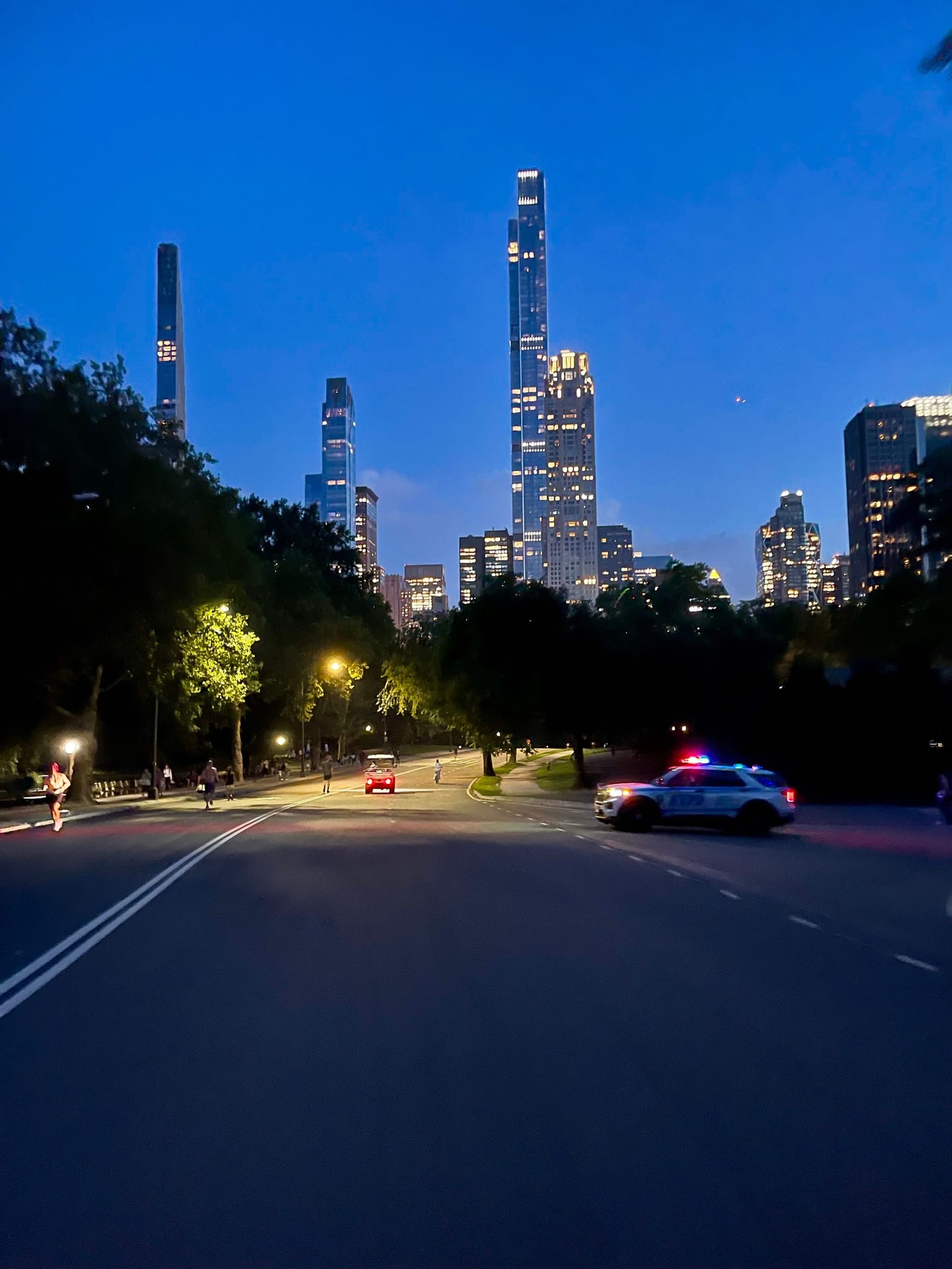
For a while, I spent a lot of time in Central Park going nowhere.
Literally. I would get on my bike from the Upper East Side, enter the park, ride the loop, finish it, and sometimes do it again.
I wasn’t going anywhere.
That was the point.
New York is remarkably good at filling every available inch of your life. There is always somewhere to be, someone to answer, something to fix, something to pay for, something your children need, something your work requires. Even stillness here has a kind of noise to it.
I had reached a period in my life when I needed something New York does not give up easily. I needed room to think.
The script
I had come back to New York after working in Washington and did what seemed obvious. I started looking for another job.
Government affairs. External affairs. Regulatory affairs. Something senior enough to make sense of the experience I had accumulated and conventional enough to answer the question people eventually ask when one chapter ends: What are you doing next?
I knew how this worked. Update the résumé. Find the openings. Talk to people. Apply. Interview. Take the next seat.
Except something was wrong. I was doing the work, but never with the intensity I knew I was capable of. Applications that should have felt urgent felt mechanical. Opportunities that looked perfectly sensible on paper produced almost no excitement in me.
At first I blamed the market. Then I blamed myself. Eventually I realized I was trying to solve the wrong problem. The problem was not that I had failed to identify my next job.
The problem was that I had stopped imagining my next life.
There is a difference. One asks where you fit inside something that already exists. The other asks what ought to exist because you were here.
I had spent enough of my life building things to recognize the distinction, but for a while I had forgotten it. That scared me more than I admitted.
A city of rooms
Returning to New York also meant returning to a life with roots. I have lived on the Upper East Side long enough that the neighborhood no longer feels anonymous. My oldest son has attended the same school since kindergarten. He is in high school now, which is difficult for me to type without wondering where the hell the time went.
A school community like that becomes its own small city. Children grow up together. Parents become friends. You attend the same events, sit through the same performances, stand along the same sidelines, celebrate the same milestones and slowly accumulate a decade of familiarity.
New York contains eight million people, yet your own New York can become surprisingly small. There are advantages to that. Community is one of them. But there are moments when familiarity makes you crave somewhere you are unknown.
Washington had given me that. After work there, I could disappear into the city. Nobody knew my routines. Nobody knew which restaurant table I preferred or who might be sitting across from me. There was a freedom in that anonymity that I did not fully appreciate until I returned home.
Back in New York, life started to feel like a collection of rooms. Home. School. Meetings. Applications. Obligations.
Rooms can be wonderful places. Some of the most important things in life begin inside them. But not everything that begins in a room is meant to remain there.
Eventually, something needs daylight.
Going in circles
The bike solved something before I understood what it was solving. There is a peculiar quality to thinking while moving. Your body has enough to do that it stops interfering with your mind.
Pedal. Breathe. Watch the road. Avoid the runner drifting into the bike lane. Keep moving. And somewhere underneath all of that, another process begins.
I started looking forward to those rides less as exercise and more as meetings with myself. Central Park is unusually good for this because it simultaneously removes you from New York and reminds you exactly where you are.
One moment you are riding beneath trees that nearly erase the city. Then the road bends, the landscape opens and one of the pencil towers appears above the canopy. Keep riding and Fifth Avenue comes into view.
Those buildings became useful to me. Not because I wanted a particular apartment. Not because I was trying to manifest a penthouse by staring at one hard enough. They reminded me that somebody had imagined every improbable thing I was looking at before anyone else could see it.
Every building begins as something ridiculous. Lines on paper. Numbers in a spreadsheet. A conversation somebody else might have dismissed. An empty parcel and a person saying, “What if?”
The physical world is filled with evidence that imagination occasionally survives contact with reality. I needed that evidence.
The things you don’t tell people
There is another part of creation that I have learned to protect. The beginning. I rarely talk about an idea when it is young. This is not secrecy for the sake of secrecy. It is preservation.
An idea in its earliest stages is fragile because you do not yet have enough evidence to defend it. You are working from instinct, pattern recognition and some internal conviction that you cannot fully articulate yet.
Tell people too soon and they begin helping. They ask sensible questions. Have you thought about this? What about that? Is there really a market? Wouldn’t it be easier to do it this way? Do you know somebody already tried that?
Most of this is offered with good intentions. It can also kill something before it has learned how to stand.
So I stopped asking permission a long time ago. I think quietly. I build. I test. And once the thing becomes real enough to survive other people’s opinions, I open the door.
This can be difficult for people close to me. Silence can look like distance when you cannot see what is happening underneath it. Sometimes the person you most want to tell is precisely the person you cannot tell yet, because their opinion carries enough weight to alter the experiment.
That is one of the contradictions of building anything that matters. The absence of disclosure is not always the absence of trust. Sometimes it means the thing matters enough that you are protecting it until you know what it is.
RegulatorIndex
Somewhere during those rides, I began thinking about utility regulation. Not particularly surprising given my background, but this time I was thinking about it as a user.
Why was information about the people regulating some of the largest infrastructure systems in America scattered everywhere? Why did understanding a state commission often require bouncing between government websites, PDFs, biographies, meeting calendars and docket systems? What would happen if someone simply organized it?
The first idea was modest. A directory. Something useful. That became RegulatorIndex.
Then, as often happens when you build something, solving one problem exposes another. The information was useful. But information wasn’t the real problem. The harder problem was what organizations did after they knew something.
Who owns the relationship? What changed after the meeting? What did the regulator say six months ago? What commitment did the company make? What happens when the person carrying all that institutional knowledge leaves? Why does a profession built around relationships still operate through scattered notes, inboxes, spreadsheets and somebody’s memory?
The bike kept moving. The questions got better. Eventually StatecraftCRM appeared. Not as a lightning bolt. As an accumulation.
One lap. Another question. Another lap. Another connection. Eventually, the thing I had been looking for became obvious enough to build.
Architecture
There is an irony here. Technology people like to talk about architecture. System architecture. Information architecture. Cloud architecture. Enterprise architecture. The word suggests that building begins with components.
It doesn’t. Architecture begins with understanding what the thing must eventually allow people to do. The technical choices come later.
That was true of StatecraftCRM. The software mattered, obviously. But the bigger question was what kind of government affairs organization the software should make possible.
One that remembers. One that follows through. One that does not lose its history every time somebody changes jobs. One that can distinguish activity from consequence. One that gives leadership a credible view of what is happening without pretending software can replace human judgment.
I began to see the product less as an application and more as infrastructure. And somewhere in that process, the future around it started getting larger too.
There are things I can now imagine that I could not have explained a year ago. There are people I can imagine building beside me who did not know they were already present in the picture. Eventually, every serious system needs a principal architect.
Sometimes the architect simply hasn’t seen the plans yet.
Privacy is not permanence
One of the mistakes we make is assuming the current shape of something is its intended final shape. It rarely is.
Companies begin at kitchen tables. Books begin as notes nobody else has read. Buildings begin as drawings. Relationships between ideas begin inside one person’s head. Some things begin privately because privacy is what allows them to survive long enough to become real.
But privacy and permanence are not the same thing. A room can be a beginning without becoming a boundary.
The important question is whether something is being contained because there is nowhere else for it to go, or protected because someone is preparing it for somewhere larger. Those are very different things. I understand that distinction much better now than I did before those rides.
And I understand something else. If you are building quietly, you still have a responsibility to the people who matter to you. You cannot expect someone to understand a plan they have never been allowed to see.
There is a point when protecting the idea becomes excluding the person. I have probably waited too long at times to recognize that point. That is something I intend to get better at.
The park between decisions
I still ride Central Park. Sometimes because I need exercise. Sometimes because I need to solve something. Sometimes because I know there is a question somewhere in my head that I have not yet learned how to ask.
The ritual is simple. Get on the bike. Enter the park. Move. Look up. Think bigger than whatever problem followed you through the gate.
There is something miraculous about discovering that your mind still works when you give it enough room. I had mistaken uncertainty for the absence of direction. What I actually needed was enough silence to hear myself again.
RegulatorIndex came from that silence. StatecraftCRM came from it. Other things are coming from it too. Some I can talk about now. Some I still can’t.
But I have learned not to confuse the period before something becomes visible with the absence of progress. I learned that lesson riding in circles. Which is funny, because from the outside, riding in circles looks an awful lot like going nowhere.
I wasn’t going anywhere.
I was figuring out where we could go.
Michael Christopher Warren is a builder and author in New York. He is the founder of StatecraftCRM, RegulatorIndex and Unborrowed.